
When Door Installation Is Better Than Another Repair
I can’t tell you how many times I’ve walked into a house in the Avenues or Sandy and seen a door that’s been "fixed" five different times. You know the one—it sticks in the summer when it’s humid, and then in the winter, you can practically see the neighbor’s Christmas lights through the gap at the top. Most of the time, folks just keep shaving a little wood off the edge or trying to tighten a screw that’s already stripped out the frame. But here’s the thing I’ve learned after years of doing this: sometimes, you’re just throwing good money after bad. If your door slab is warped—meaning if you look down the edge and it looks more like a potato chip than a piece of wood—no amount of "tuning" is going to fix that. In our dry Utah climate, wood does some crazy things. It shrinks, it expands, and if it wasn’t sealed right the first time, it’s going to fight you every single day.
I usually tell my clients that if the frame itself is out of square—maybe the house settled a bit over the last forty years—trying to make an old door fit is like trying to put a square peg in a round hole. You’re better off ripping out the old jamb and starting fresh. It sounds like a bigger job, but it actually saves you a headache (and a lot of drafty nights) in the long run. I've seen homeowners spend hundreds on various handymen who just come out and "kick the can down the road" by making minor adjustments that only last a few months. When the seasons change again, they're right back where they started. A full replacement with a new, square frame means everything is aligned from day one. No more fighting the handle, no more drafty entryways, and no more wondering if the door is actually going to stay shut when the wind picks up. It's about getting that long-term peace of mind that a simple patch-up job just can't provide.
Typical Cost and Timeline in Salt Lake County
Talking about money is always a bit tricky because every house has its own little surprises, but let’s get real about what you’re looking at here in the Salt Lake Valley. If we’re just talking about a standard interior bedroom door—what we call a "slab swap"—it’s usually a pretty quick afternoon project. But if we’re doing a full pre-hung unit with the frame and trim, that’s a different story. Exterior doors are the big ones. You aren’t just paying for a piece of wood or fiberglass; you’re paying for the sealing, the threshold, and the fact that we have to make sure no snow or rain gets into your subfloor. I’ve seen some "budget" installs where they skip the flashing or the proper caulking, and two years later, the homeowner is calling me because their entryway floor is rotting out. Don’t be that person.
A quality exterior install usually takes a solid day of work. We have to make sure the threshold is perfectly level—which is harder than it sounds in some of these older houses—and that the weatherstripping is making a tight seal all the way around. Pricing can vary wildly depending on if you’re picking up a basic door at the big-box store or if you’re ordering something custom from a local shop. I always remind people that the hardware—the handles, the deadbolts, the smart locks—can add a couple hundred bucks to the bill before you even realize it. If we find rot in the subfloor when we pull the old door—which happens more than you'd think in Utah—that adds some time and material costs to the job. We also have to consider the finish work. Are we reusing your old trim, or are we putting in new, clean casing? Do you want us to paint it, or are you going to handle that part yourself? All these little decisions change the final number. But I promise we'll talk through all of it before we even pick up a screwdriver so there aren't any weird surprises when the bill comes.
- Interior door install: shorter scope, fewer weatherproofing steps
- Exterior door install: higher detail around seal integrity and threshold setup
- Hardware upgrades: deadbolts, smart locks, and striker reinforcement
- Trim and paint touch-up: final finish quality after installation
Quality Checklist We Use on Every Install
I’m a teacher at heart, so I love a good checklist. When we finish a door, I don’t just pack up my tools and leave. I want to see that door behave perfectly. First, I check the "reveal." That’s just a fancy word for the gap between the door and the frame. It should be even all the way around—about the thickness of a nickel. If it’s tight at the top and wide at the bottom, something’s not right. Then there’s the swing. If you open a door halfway and let go, it shouldn’t move. If it swings shut on its own or tries to fly open, your hinges aren’t plumb. That’s a classic sign of a rushed job. We also look at the hinges themselves. I’ve seen plenty of installs where they didn’t mortise the hinges deep enough, so they "bind" and make a creaking sound every time you move the door. That drives me nuts.
For exterior doors, the checklist is even longer. I’ll literally stand inside with the lights off and look for any sliver of daylight. If I can see light, air is getting through, and so is the dust from the valley. We test the latch and the deadbolt too. You shouldn’t have to pull on the handle or lean against the door with your shoulder to get it to lock. It should just... click. Nice and smooth. We also check the "throw" of the bolt into the strike plate. If it's barely catching, a good kick could open that door. We want it deep and secure. Finally, we look at the strike plates themselves to make sure they're recessed properly and not snagging on the door edge. Every one of these checks takes about two minutes, but together, they're the difference between a door you hate and a door you never have to think about again. That’s the Patton standard. We want it to feel like it’s been there forever, even if we just put it in an hour ago.
How to Book a Free Estimate
If you’re tired of fighting with that one door that always sticks, or if you’re just ready to upgrade the look of your home, let’s chat. I’m not here to give you a high-pressure sales pitch; I just want to help you figure out the best path forward for your specific situation. Sometimes a simple repair is all it takes—maybe just a longer screw in the top hinge or a bit of adjustment to the strike plate—and I’ll be the first one to tell you if that’s the case. I hate seeing people spend money they don't need to.
But if you need a full replacement, we’ll give you a clear, written estimate so you know exactly what to expect—no hidden "surprises" halfway through the job. You can head over to our handyman services page to see some of the other stuff we do, like minor electrical or drywall fixes, or just jump straight to our free estimate form. We’re pretty quick about getting back to folks, usually within a day or two, and we’d love to help you get your home back in tip-top shape. Whether it’s one stubborn closet door or a whole house full of new entries, we’ve got the tools and the experience to get it done right. Let's get those doors working like they're supposed to!
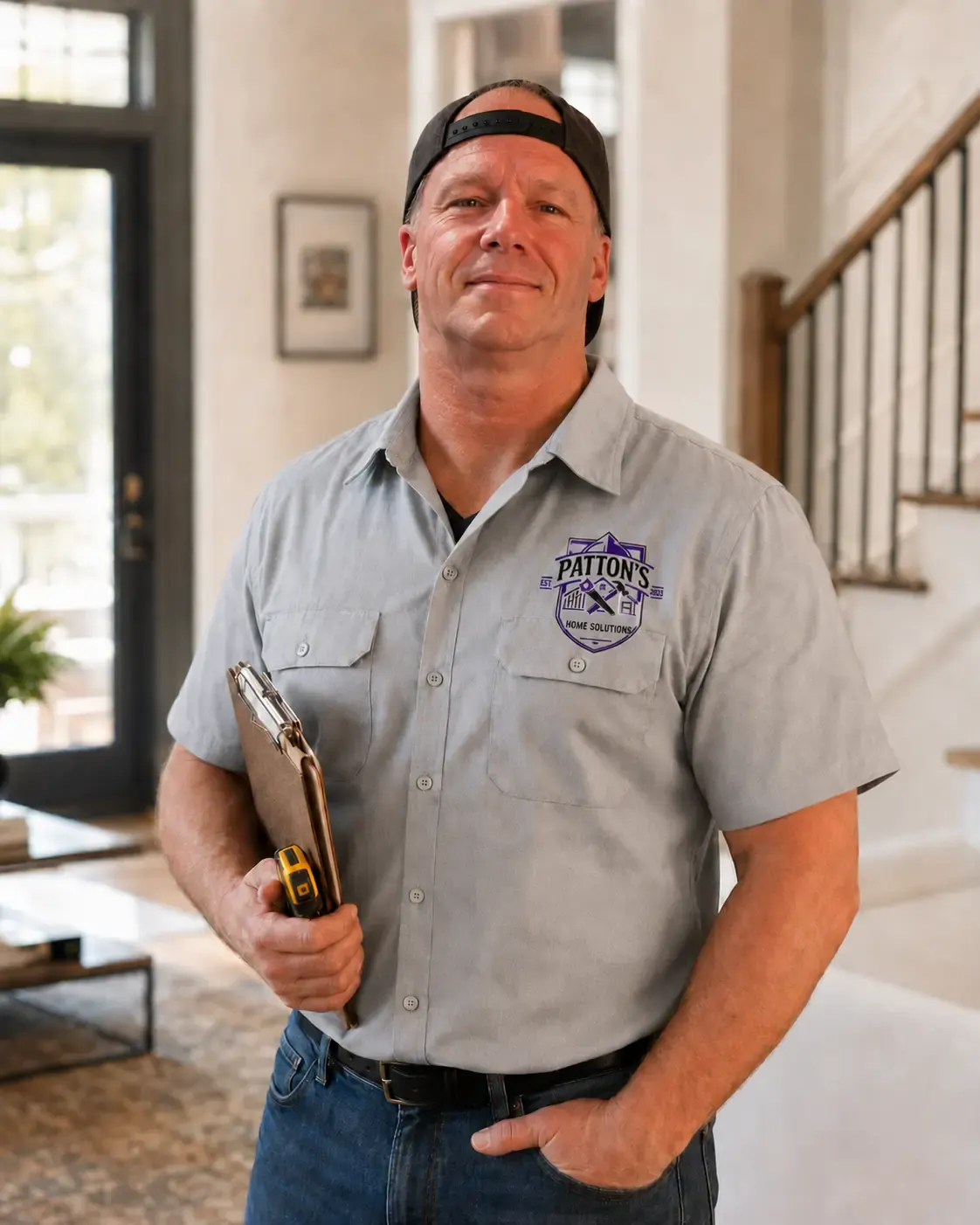
Patton field note
I have spent decades fixing, remodeling, and maintaining homes across Salt Lake County. My goal is to share practical, no-nonsense advice to help you keep your property in top shape.
Tracy Patton · Owner & Lead Specialist
Photos on this guide come from Patton's project and field archive where available; illustrative images are labeled in the article record.
Planning a handyman project?
Share your location, photos, priorities, and timing. Patton will help identify the right next step and connect the conversation to a clear service scope.
Keep researching
Connect this guide to the work itself: review related Patton projects, then check service coverage in Salt Lake City, West Jordan, South Jordan, Sandy, Draper, and nearby Salt Lake County communities.